Storm Data and Insurance
The Texas Hail Corridor Report: 2025's Numbers, Explained
By the UrgentHomePros editorial team · Published August 15, 2026 · 3 cited sources
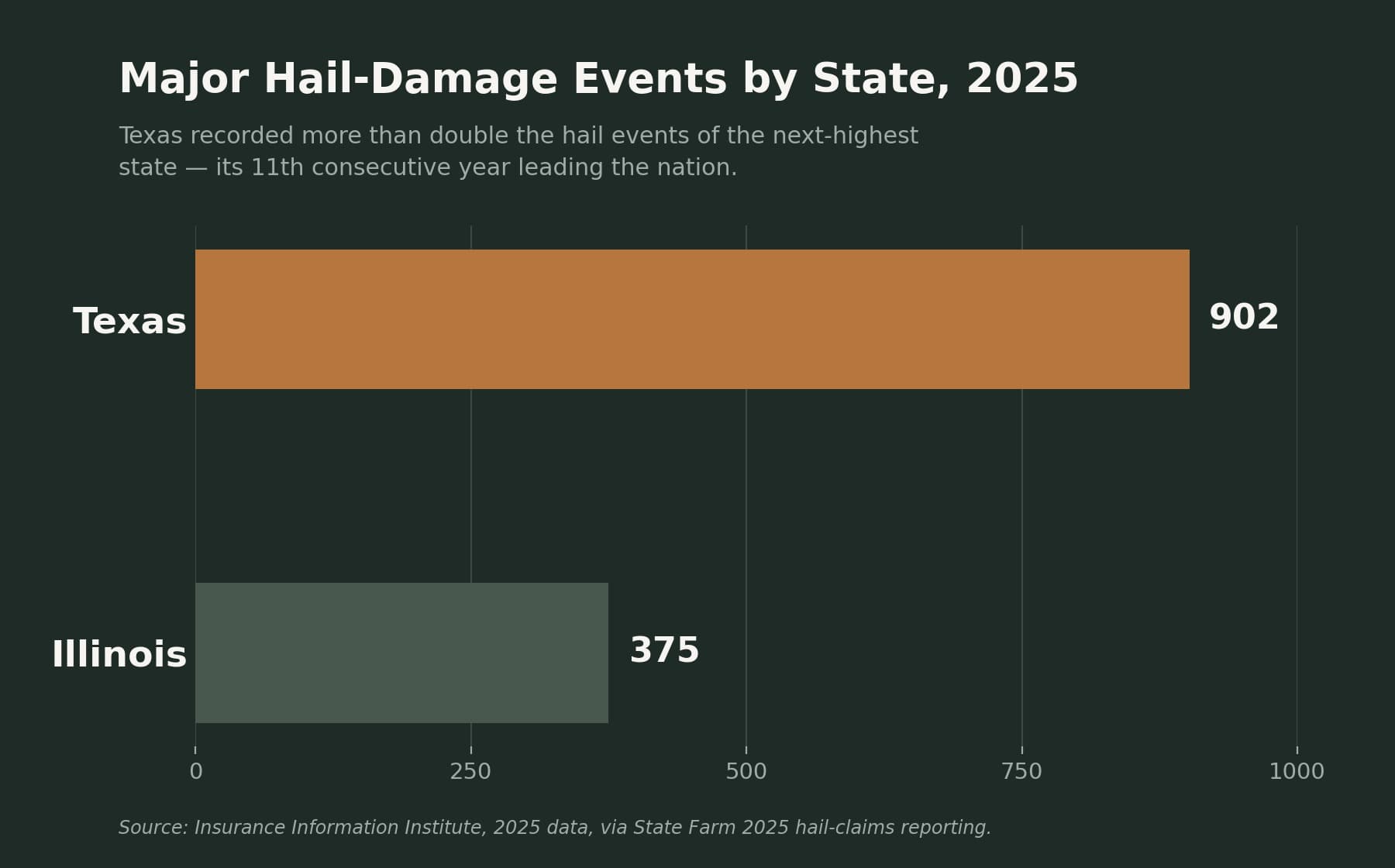
Texas recorded 902 major hail-damage events in 2025 - more than double Illinois, the next-closest state - making it the 11th year in a row Texas has led the nation in hail damage, according to Insurance Information Institute reporting. State Farm alone paid out roughly $1.4 billion on Texas hail claims that year, about a quarter of its $5.6 billion nationwide total, which is why the phrase 'hail corridor' keeps coming up across the Dallas-Fort Worth, San Antonio, and Houston metros.
Direct Answer
Texas recorded 902 major hail-damage events in 2025 - more than double Illinois, the next-closest state - making it the 11th year in a row Texas has led the nation in hail damage, according to Insurance Information Institute reporting. State Farm alone paid out roughly $1.4 billion on Texas hail claims that year, about a quarter of its $5.6 billion nationwide total, which is why the phrase 'hail corridor' keeps coming up across the Dallas-Fort Worth, San Antonio, and Houston metros.
The numbers, with sources - not just a name for the region
'Hail corridor' gets used a lot in Texas roofing marketing, often without much behind it. Here is what the actual 2025 data says, and where it comes from, so you are not taking anyone's word for it - including ours.
- 902 major hail-damage events hit Texas in 2025, according to Insurance Information Institute reporting - more than double Illinois's 375, the second-highest state that year.
- That is not a one-year fluke. 2025 was the 11th consecutive year Texas ranked #1 nationally for hail damage, a streak the National Insurance Crime Bureau has tracked for over a decade.
- State Farm, which insures roughly one in five Texas homes, processed about 95,200 hail-related claims in the state in 2025 at an average payout near $15,000 each - working out to close to $1.4 billion from that single insurer.
- Zoom out to State Farm's nationwide numbers and Texas alone accounted for roughly a quarter of the company's entire $5.6 billion hail-claims total across every state, despite Texas holding closer to 9% of the U.S. population.
- Dallas-Fort Worth, San Antonio, and Houston - the three metros UrgentHomePros actually serves - all sit inside this active corridor, though which specific metro takes the worst hit shifts year to year depending on where storm tracks happen to run.
- None of this tells you what happens at your specific address this year. Regional frequency data describes a pattern across millions of homes, not a forecast for one roof - a quiet street a mile from a hard-hit neighborhood is not unusual after a hailstorm.
What this actually means if you own a home here
- A hailstorm that looked minor from your yard can still leave granule loss or bruised shingles that are not visible without someone actually walking the roof - if a storm rolled through your area, a professional inspection is a low-cost way to find out either way.
- If you do end up filing a claim, our guide on documenting roof damage for insurance walks through the kind of documentation adjusters and contractors typically look for before you get started.
- Texas does not license roofers at the state level, which matters more than usual right after a big storm, when out-of-area crews show up chasing the same claims - our guide on what to check before hiring covers what to verify instead of a license number that does not exist here.
- If a contractor brings up waiving your deductible in any form, that is not a perk - it is specifically illegal under Texas law, and treating it as a red flag rather than a discount protects you, not just them.
Sources
The data above is cited directly from these publishers - follow the links to read the original reporting.
Frequently Asked Questions
Does living in the Texas hail corridor mean my house will get hit this year?
No - this is regional aggregate data covering millions of homes across a wide area, not a prediction about any single property. It explains why the region sees so much roofing and insurance activity generally, not what will happen at your address specifically.
Where do these numbers actually come from?
The event count and state ranking are Insurance Information Institute figures for 2025, as reported through State Farm's 2025 hail-claims disclosure. The claims and payout figures are State Farm's own numbers, covering that one insurer rather than every policy written in Texas - we have stuck to what these sources actually report without adding anything beyond it.
Is Dallas-Fort Worth worse than San Antonio or Houston for hail?
It varies by year depending on where storm systems track, and we do not have a reliable metro-level breakdown from these particular sources to make that call responsibly. All three sit within the broader corridor these statewide numbers describe.