Storm Data and Insurance
What Size Was the Hail? A Field Reference Guide
By the UrgentHomePros editorial team · Published August 15, 2026 · 1 cited source
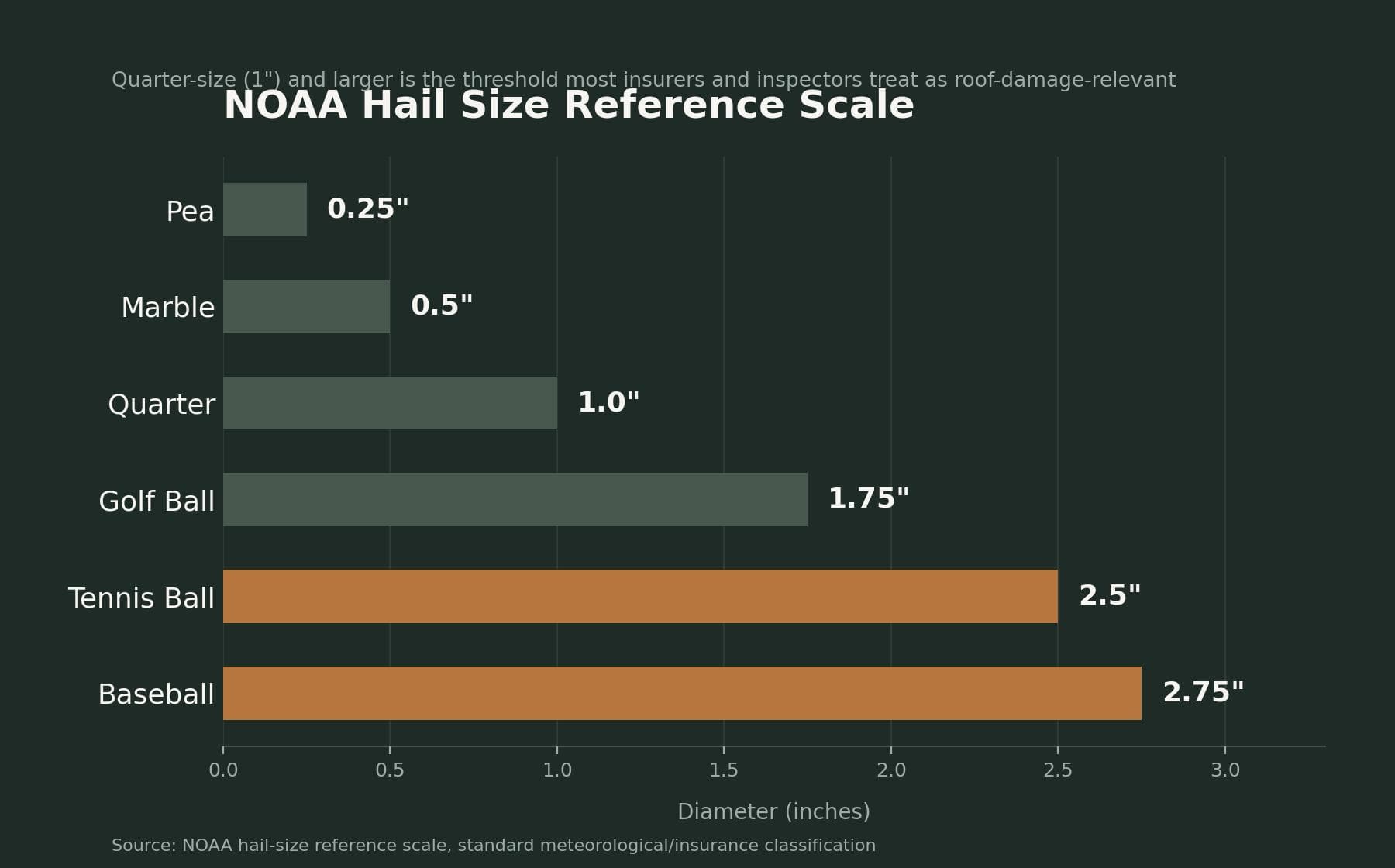
Meteorologists and insurers use a standard reference scale that compares hail diameter to everyday objects - pea (0.25"), marble (0.5"), quarter (1"), golf ball (1.75"), tennis ball (2.5"), and baseball (2.75") and larger. Quarter-size (1 inch) and up is the size most commonly cited by insurers and inspectors as the threshold worth a closer look at roofing and exterior surfaces, though actual damage always depends on the roofing material, its age and condition, and impact angle - size alone is not a diagnosis.
Direct Answer
Meteorologists and insurers use a standard reference scale that compares hail diameter to everyday objects - pea (0.25"), marble (0.5"), quarter (1"), golf ball (1.75"), tennis ball (2.5"), and baseball (2.75") and larger. Quarter-size (1 inch) and up is the size most commonly cited by insurers and inspectors as the threshold worth a closer look at roofing and exterior surfaces, though actual damage always depends on the roofing material, its age and condition, and impact angle - size alone is not a diagnosis.
Field Reference Scale
What Size Was the Hail?
Tap the size that best matches what you observed. Sizes reference the standard NOAA hail-size scale used by meteorologists and insurers. This is general context only, not a damage diagnosis - actual assessment requires a real inspection.
How to estimate size after the fact
Most people do not measure hail as it falls. Here is how to reconstruct a reasonable estimate afterward, and what each size range tends to correlate with according to the standard scale.
- Check for hail still in shaded, protected areas (under eaves, in planters) within a few hours of the storm - it often survives longer than hail in direct sun.
- Compare against a coin or ball you have on hand rather than guessing - a quarter is exactly 1 inch, a golf ball is about 1.75 inches.
- Note that local news and NWS storm reports for your date and county often include an official hail size estimate, which can corroborate or replace your own measurement.
- Remember size is one input, not the whole picture - a shorter burst of smaller hail combined with high wind can still cause meaningful damage, and a brief golf-ball event might not.
- Photograph any hail you find next to a coin or tape measure for scale before it melts - this becomes useful documentation if you file a claim later.
- Treat this scale as a communication tool for describing what you saw to an inspector or adjuster, not as a substitute for their physical assessment of the roof itself.
Why this matters before you call anyone
- Insurance adjusters and roofing inspectors will ask what size hail fell - having a specific, defensible answer (with a photo if possible) makes that conversation more efficient.
- Not every hail event that reaches quarter-size or larger causes damage, and some smaller, longer-duration events can still stress a roof. Size is context, not a verdict.
- If you are unsure what fell in your area, NOAA's Storm Events Database and local NWS storm reports are public, free, and searchable by date and county.
- Pair this with a visual check from the ground - missing shingles, dented gutters, or debris in the yard are more immediately actionable signs than size estimation alone.
Sources
The data above is cited directly from these publishers - follow the links to read the original reporting.
Frequently Asked Questions
Is quarter-size hail always damaging to a roof?
Not always. Quarter-size (1 inch) is a commonly cited threshold that insurers and inspectors treat as worth checking, but actual damage depends on the roofing material, its age, wind-driven impact angle, and duration of the storm. A physical inspection is the only way to confirm damage either way.
Where can I find the official hail size reported for my storm?
NOAA's Storm Events Database and local National Weather Service storm reports are public and searchable by date and county, and are generally considered more reliable than personal estimation after the fact.
Does bigger hail always mean a bigger insurance payout?
Hail size is one factor insurers and adjusters consider, but the actual claim outcome depends on documented damage to your specific roof, your policy terms, and the adjuster's inspection findings - this guide is general reference information, not insurance or legal advice.