Damage Assessment
What to Do Immediately After a Hailstorm Hits Your Roof
By the UrgentHomePros editorial team · Published July 21, 2026
In the hours and days right after a hailstorm, prioritize safety, document visible damage from the ground, check for active leaks inside the home, and avoid climbing onto the roof yourself - a professional inspection can follow once immediate safety and documentation steps are complete.
Direct Answer
In the hours and days right after a hailstorm, prioritize safety, document visible damage from the ground, check for active leaks inside the home, and avoid climbing onto the roof yourself - a professional inspection can follow once immediate safety and documentation steps are complete.
First steps after the storm passes
The period right after a hailstorm is mostly about safety and documentation, not immediate repair decisions.
- Wait until the storm has fully passed and check for downed power lines or other hazards before going outside.
- Walk the perimeter of your home and check gutters, downspouts, and visible siding for dents, which can be an early clue without needing to access the roof.
- Check inside the home, especially the attic if accessible, for any signs of water intrusion, staining, or dripping.
- Photograph visible exterior damage from the ground using zoom rather than climbing up to inspect the roof yourself.
- If active leaking is occurring, place containers to catch water and move belongings away from the affected area.
- Contact your insurer to understand your claim filing window, and request a professional inspection before committing to any repair work.
What to avoid in the immediate aftermath
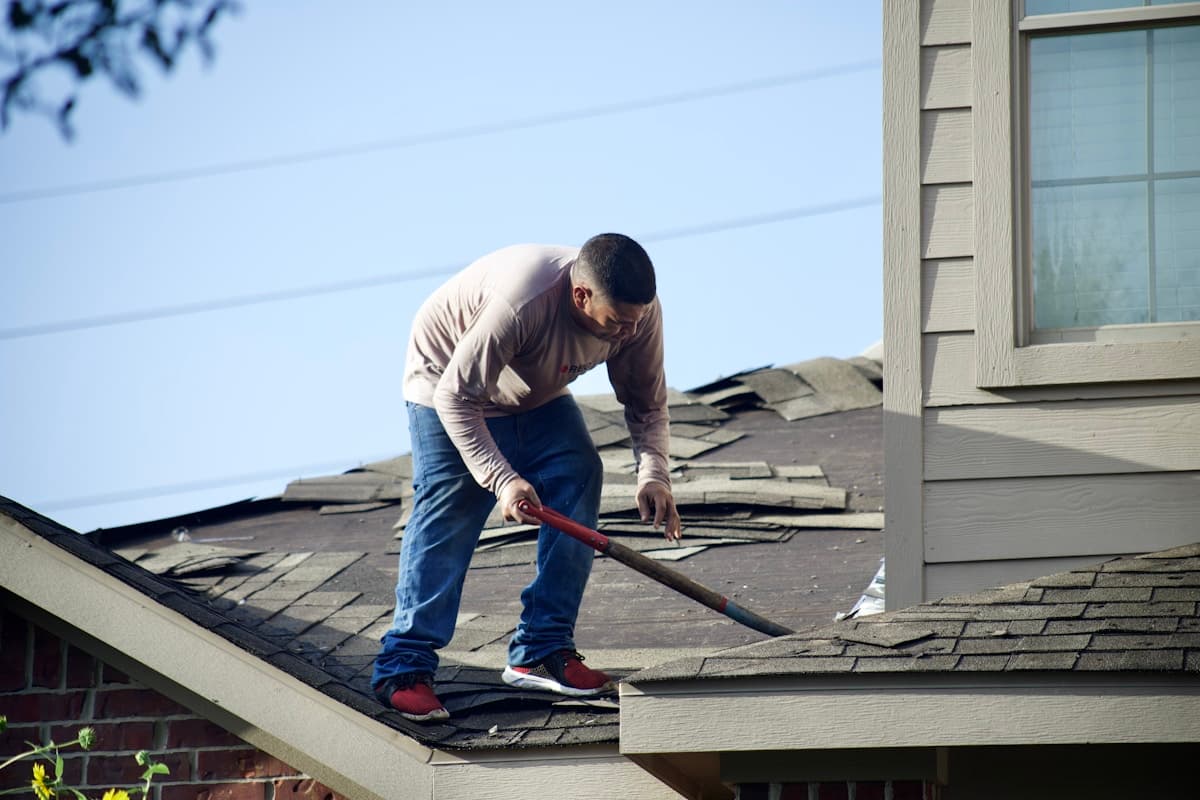
- Avoid climbing onto the roof yourself - wet, damaged surfaces are a real fall risk even for someone comfortable with heights.
- Avoid signing a repair contract with the first contractor who shows up unsolicited, especially before an adjuster has assessed the damage.
- Avoid assuming no visible damage means no damage - hail bruising can be difficult to see without close inspection.
- Avoid delaying temporary protective measures (like tarping) if active leaking is occurring, since delay can worsen interior damage.
Frequently Asked Questions
Should I call my insurance company or a roofer first after a hailstorm?
Many homeowners contact their insurer first to understand the claims process and timeline, then arrange a professional inspection. There's no single correct order, but avoid signing repair contracts before understanding your coverage.
How can I tell if hail was large enough to actually damage my roof?
Dented gutters, downspouts, or outdoor AC units are a reasonable ground-level indicator that hail was large enough to potentially affect your roof, even if roof damage isn't visible from below.